

Thursday, 5 September 2013


Environmental Photography Competition
Your creative photo capturing Penrith’s local waterways or the plants and animals that rely on them could start your photographic career and score you a share in more than $1,300 in prizes. Council has launched its fifth annual Environmental Photography Competition and is encouraging local amateur photographers to snap images that show the value of our creeks and the life they support.
The photos will be used to highlight National Water Week and Biodiversity Month to promote the need to protect our natural waterways for the plants and animals living in them.

2012 Open Category Winner, by Shane Corderoy
To help you capture the perfect image, residents are invited to attend a FREE Outdoor Photography Workshop guided by a professional photographer at 10am on 20 October 2013. The workshop will help you understand how your camera works and how to use basic photographic principles to give your photos that WOW Factor, to make them stand out from the usual everyday 'snap shots'.
To RSVP for the free workshop contact Council on 4732 8055 or email drech@penrithcity.nsw.gov.au. Why not use the workshop to develop your photographic talent and submit an entry for the photo competition?
The “Local Water, Local Life” competition gives shutterbugs the opportunity to enter their stunning images reflecting the water and biodiversity theme in one of three categories:
• Open (ages 18+): $500 photographic gift voucher plus a double pass to Penrith Whitewater Stadium valued at $188.
• Youth (ages 12-18): $250 photographic gift voucher and a double pass to Penrith Whitewater Stadium valued at $188.
• Kids (under 12 years): $250 photographic gift voucher.
Simply address your entry before 25 October 2013 to “Penrith Environmental Photographic Competition”, Penrith City Council PO Box 60 Penrith NSW 2751 or email photocomp@penrithcity.nsw.gov.au. To download an entry form and for competition terms and conditions visit www.penrithcity.nsw.gov.au/PhotoComp You’re also encouraged to share your work via social media – visit facebook.com/PenrithIsHere or twitter.com/PenrithIsHere
The photos will be used to highlight National Water Week and Biodiversity Month to promote the need to protect our natural waterways for the plants and animals living in them.
2012 Open Category Winner, by Shane Corderoy
To help you capture the perfect image, residents are invited to attend a FREE Outdoor Photography Workshop guided by a professional photographer at 10am on 20 October 2013. The workshop will help you understand how your camera works and how to use basic photographic principles to give your photos that WOW Factor, to make them stand out from the usual everyday 'snap shots'.
To RSVP for the free workshop contact Council on 4732 8055 or email drech@penrithcity.nsw.gov.au. Why not use the workshop to develop your photographic talent and submit an entry for the photo competition?
The “Local Water, Local Life” competition gives shutterbugs the opportunity to enter their stunning images reflecting the water and biodiversity theme in one of three categories:
• Open (ages 18+): $500 photographic gift voucher plus a double pass to Penrith Whitewater Stadium valued at $188.
• Youth (ages 12-18): $250 photographic gift voucher and a double pass to Penrith Whitewater Stadium valued at $188.
• Kids (under 12 years): $250 photographic gift voucher.
Simply address your entry before 25 October 2013 to “Penrith Environmental Photographic Competition”, Penrith City Council PO Box 60 Penrith NSW 2751 or email photocomp@penrithcity.nsw.gov.au. To download an entry form and for competition terms and conditions visit www.penrithcity.nsw.gov.au/PhotoComp You’re also encouraged to share your work via social media – visit facebook.com/PenrithIsHere or twitter.com/PenrithIsHere
Monday, 29 April 2013
FREE Community Workshops
Council is excited to offer our latest batch of free community workshops - with topics so fresh they're still warm from the oven! Click on the flyer below to view it full size, and don't forget to RSVP. We look forward to seeing you there!


Friday, 26 April 2013
Save money with the Home Power Savings Program

Eligible households can save up to 20% a year on their power use, thanks to the Home Power Savings Program. Participants will receive a personal Power Savings Action Plan, which will identify free and lost opportunities to save power around your home. Households will also receive a FREE power savings kit containing the following:
* Stand-by saver power board
* 4 energy efficient light bulbs
* Low flow showerhead
* Shower timer
* Tap aerator
* Draught-proof strips for around the door
* Door snakes
For more information and to check your eligibility, please visit http://www.savepower.nsw.gov.au/freehelp or call 1300 662 416. The Home Power Savings Program is an initiative of the NSW State Government.
Wednesday, 24 April 2013
Plant a tree and remember mum

This special community event welcomes people of all ages to nurture the environment and remember their Mum with a commemorative planting.It’s free to take part.
To ensure we have enough plants for everyone please register by calling 4732 8088 or emailing parks@penrithcity.nsw.gov.au
WHEN: Sunday 12 May 2013, 9am – 12 noon
WHERE: Gibbes Street off Spencer St, Regentville. Access is 600 metres south of the M4 and Mulgoa Road intersection.
Tuesday, 23 April 2013
Mamre Harvest Festival - Sunday 28 April
This Sunday is the Mamre Harvest Festival. Held at the historic Mamre House, it's a great celebration of the local food we have in our local area. With face painting, an animal farm and a scarecrow competition it's sure to be great fun for the kids. Adults aren't left out either, with wine tasting and gourmet food on offer. Check out the flyer below for more info!


Thursday, 6 December 2012
Cana farm - A great social enterprise in Orchard Hills
Cana Farm is a scenic farm located in Orchard Hills. Run by Cana Communities, the farm works with marginalised people and aims to equip them with the skills and confidence to get their lives back on track. One of their key programmes is their work with Tafe Outreach, which provides people with skills and qualifications to gain full time employment.
We were shown around by Julie Sneddon, who coordinates the farm and is a volunteer. Her enthusiasm and love for her work and the positive changes they have achieved is infectious. Listening to her stories about the successes they’ve had, it’s hard not to get inspired by it all.
For more information on Cana Communities visit their website.
The Cana Cafe is in the old farm shed, and offers hospitality experience for their tafe Outreach students. I can recommend the scones!

This furniture is made in the Cana workshop from recycled timber. It's another example of the work done through their Tafe Outreach programs.

This side of the farm features a nice dam overlooked by a new chill out space. The building of the deck and shade structure was again done by people participating in Cana programs to give them work skills. It will be used as a counseling and relaxation space.

This brightly coloured artwork is painted on recycled paper. It will actually be used as wrapping paper for their Christmas Puddings (on sale now), profits of which go towards a Christmas feast for the community in Redfern.

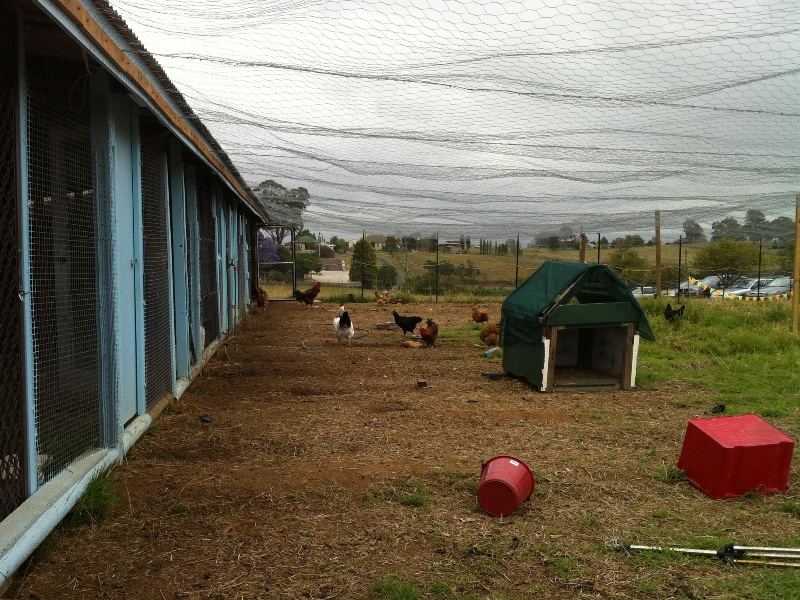
This is their organic chicken run - plenty of room for them to stretch their wings!

We were shown around by Julie Sneddon, who coordinates the farm and is a volunteer. Her enthusiasm and love for her work and the positive changes they have achieved is infectious. Listening to her stories about the successes they’ve had, it’s hard not to get inspired by it all.
For more information on Cana Communities visit their website.
The Cana Cafe is in the old farm shed, and offers hospitality experience for their tafe Outreach students. I can recommend the scones!

This furniture is made in the Cana workshop from recycled timber. It's another example of the work done through their Tafe Outreach programs.

This side of the farm features a nice dam overlooked by a new chill out space. The building of the deck and shade structure was again done by people participating in Cana programs to give them work skills. It will be used as a counseling and relaxation space.

This brightly coloured artwork is painted on recycled paper. It will actually be used as wrapping paper for their Christmas Puddings (on sale now), profits of which go towards a Christmas feast for the community in Redfern.

This is their organic chicken run - plenty of room for them to stretch their wings!
Monday, 26 November 2012

Thursday, 8 November 2012
Council staff back a donkey in the Melbourne Cup. And a chicken. And a fruit tree...

Tuesday was the Melbourne Cup. Widely referred to as the ‘race that stops a nation’, for most workplaces it sees some betting sweeps and an afternoon tea. However Margaret Streater from Council’s Children’s Services had a different idea for the Cup – Council staff should back a donkey!
Not just any donkey mind you, but a donkey from Oxfam. Oxfam have a number of gifts available to help people living in poverty and disadvantage. Donkeys are used in emergencies to carry essential medicine and food packages where vehicles can’t access.
So on Melbourne Cup day Margaret went around and collected money from staff for the donkey, and ended up collecting an impressive $390.30! On top of the donkey, this enabled her to directly support:
• Water for a school in Cambodia
• Breakfast for HIV positive children in South Africa
• A couple of goats for a family in Mozambique
• A chicken for a family in Laos
• Fruit trees for a community in South Africa
Thanks to Margaret for organising the collection and to all of the Council staff who donated their own money instead of having a flutter on the Cup.
For more information on how you can support initiatives like this, check out the Oxfam shop www.oxfamshop.org.au
Tuesday, 11 September 2012
Local students plan a city for our future
Check out this amazing sustainable city created by 140 students from Erskine Park High School. The year 8 students involved had to consider what it takes to make a ‘city’ and then construct it themselves as part of their ‘Suburban Upcycle’ project. Cardboard boxes (including some from local businesses) were used to make a variety of buildings which made up the city, which was displayed at Penrith Regional Gallery & The Lewers Bequest over the weekend.
I’ve got to say I was pretty impressed with not only their artistry and design skills, but also their planning skills. There was a variety of housing types, essential services like hospitals, entertainment and dining options, and small businesses to serve the community. Not only that, the whole thing was built from sustainable materials and it can also be completely recycled at the end of its lifecycle – it’s basically a perfect model of a sustainable city! Congratulations to all of the students involved, and the teachers for coming up with such a cool project.


I’ve got to say I was pretty impressed with not only their artistry and design skills, but also their planning skills. There was a variety of housing types, essential services like hospitals, entertainment and dining options, and small businesses to serve the community. Not only that, the whole thing was built from sustainable materials and it can also be completely recycled at the end of its lifecycle – it’s basically a perfect model of a sustainable city! Congratulations to all of the students involved, and the teachers for coming up with such a cool project.


Wednesday, 25 July 2012
Green with veggie patch envy
While I love my veggie patch, I'm the first to admit it has a few weeds and is far from a manicured beauty. So it was with a serious case of envy that I checked out the veggie patch at Vaucluse House on the weekend.

Image from HHT website
Vaucluse House was built over a period between 1805 and the 1860s by William Charles Wentworth and his wife Sarah. Though financially they were quite well off, they were shunned socially, as not only were they both 'illegitimate' children, but they also had two children together before they married. Charles Wentworth was involved in a number of firsts for NSW, including the first European crossing of the Blue Mountains, establishing Sydney University as the first university in Australia, and he was also involved in establishing the colony's first independent newspaper. These days the house is managed by the Historic Houses Trust and is open for the public to check out (click here for more info). If you do visit, I can highly recommend the fresh scones from the Teahouse!
The Trust have set up the house to appear as if the family had just left the day before, kind of like a time capsule. The kitchen garden is no different, and is planted with the same varieties that would have been grown for the family. One interesting thing is the inclusion of pineapple - you have to remember that back in those days fresh fruit was nowhere as readily available as it is today, so exotic fruit like pineapple was virtually unheard of in England and would have made an exciting addition to their garden.
This is the view of the picturesque kitchen garden from the house.

And the view from the garden back to the house.


Image from HHT website
Vaucluse House was built over a period between 1805 and the 1860s by William Charles Wentworth and his wife Sarah. Though financially they were quite well off, they were shunned socially, as not only were they both 'illegitimate' children, but they also had two children together before they married. Charles Wentworth was involved in a number of firsts for NSW, including the first European crossing of the Blue Mountains, establishing Sydney University as the first university in Australia, and he was also involved in establishing the colony's first independent newspaper. These days the house is managed by the Historic Houses Trust and is open for the public to check out (click here for more info). If you do visit, I can highly recommend the fresh scones from the Teahouse!
The Trust have set up the house to appear as if the family had just left the day before, kind of like a time capsule. The kitchen garden is no different, and is planted with the same varieties that would have been grown for the family. One interesting thing is the inclusion of pineapple - you have to remember that back in those days fresh fruit was nowhere as readily available as it is today, so exotic fruit like pineapple was virtually unheard of in England and would have made an exciting addition to their garden.
This is the view of the picturesque kitchen garden from the house.

And the view from the garden back to the house.


Thursday, 31 May 2012
Celebrating the Glenmore Ridge Fitness Trail Launch
On the weekend just been, Council's sustainability mascot Echo was seen celebrating the launch of the new Glenmore Ridge Fitness Trail. With a range of fitness equipment spread out at intervals, it's the perfect place to get some exercise and some fresh air - just the thing after a week of work! To find the new fitness equipment, it's on the south side of the bushland next to Parakeet Grove, in Glenmore Ridge. Although Echo is a lizard of few words, he seemed pretty impressed with the new fitness trail. Or maybe he just liked the music...


Thursday, 3 November 2011
FREE Sustainable Living Workshops
Council is once again offering a series of FREE Sustainable Living workshops for the community. These are a fantastic opportunity to learn about how to reduce your impact on our environment and save some money as well! For more information, click on the image below to make it larger.
These workshops are being held as part of Council's Werrington Creek Rehabilitation Project.

These workshops are being held as part of Council's Werrington Creek Rehabilitation Project.

Council staff have a clothing round up!

Sharon from the Salvo's is presented with a ute-load of clothes, donated by Penrith Council staff.
What happens when you have a clothing drive at Penrith Council? You get that many clothes you need a ute just to transport it all! Here in the Sustainability Unit we wanted to promote ‘Buy Nothing New Month’ to Council staff, and we figured a clothing drive was a great way to do it. We chose to donate the clothes to the local Salvo’s op shop – the Salvo’s are a partner of ‘Buy Nothing New Month’ and they do some great work for the community.
So with that we put the word out to staff to have a Spring clean and go through their wardrobes. They did the rest and the result was a ute-load of clothes! We didn’t count them (we’d still be counting), but we ‘guesstimate’ there’s about 200kg of clothes in there – a decent haul by any standards. Sharon, the Manager of the local Salvo’s Store, was thrilled with the result. In recent times they’ve been having difficulty attracting donations, so these clothes were warmly welcomed.
How about having a Spring clean of your own, and donate it to your local op shop? It’s a great opportunity to make some more room in your wardrobe and help out a charity. And why not ask your boss if you can do a clothing drive at your work? All it takes are some emails to your fellow staff and some signs to remind people – it’s easy to organise, doesn’t take much time and it’s great ‘social capital’ for a business.
Friday, 28 October 2011
Blue Mountains Eco Homes Tour
A couple of weeks ago I had the opportunity to participate in the latest Eco Homes Tour, which was held in the upper Blue Mountains. The tours are organised by Blue Mountains architect Nigel Bell, who specialises in designing sustainable homes. The homes are graciously opened by the home owners, and there is always a selection of different homes and building styles on show. All the money raised from the tours go to the Katoomba High School P&C, so you’re supporting a good cause too.
If you’re interested in hearing about the next tour which is likely to be held in May or so next year, visit www.ecohomestour.com.au, add your name to their email list and they’ll let you know when it’s happening.
The first stop for the day was a house still very much under construction in Blackheath. The home is designed to make the most of the views and the sun, with lots of windows on the north side. What caught my eye most was the timber work in the house. The timber was almost all from the house block itself, they felled the timber and had it milled on site. The builder handling the timber work was a craftsman in the true sense of the word, his previous work including restoration work on the Globe Theatre in the UK. This was the playhouse where many of Shakespeare’s plays were held, and the restoration was period correct – traditional methods and no power tools! The Blackheath home also featured earthern walls using soil from the site. This provides ‘thermal mass’ which basically helps to regulate the temperature inside the house.


Back on the bus and we travelled to Little Hartley to visit Hartley Green Power. They had a range of solar and wind generators, with most of them in use so you can check them out in action. What got most people’s attention was the electric Caterham style sports car – which was charged with solar power! There were also a number of electric bikes and scooters on display as well.


The next stop was a short trip around the corner to a house in Little Hartley. This house was actually designed by Nigel, and the happy owners had been living there for a while. It features passive solar design, strawbale walls with an earthern covering, was completely ‘off the grid’ through solar PV and was self sufficient for water as well. It was a great chance to talk to the owners and see what it was actually like to live in a house like this.


After a brief stop for lunch we visited a heritage listed cottage in Lithgow, originally built in 1878. The cottage had been restored, and it also featured a new extension using passive solar design and recycled materials. The owner was a history buff and the home was a great reflection of that – it felt part way between a museum, an antiques store and a home design magazine photo shoot! What’s more is the beautiful garden was almost all food plants, so it was really practical too. I was particularly fond of the office chair made from a WWII bomber seat – what a great example of upcycling!


The last stop on the tour was another house still under construction in Mount Victoria. Dubbed ‘the house that ebay built’ by the owner, it featured a stack of recycled materials in its construction which were bought cheaply online. The owner was also saving money by doing almost everything by himself, and only calling on specific trades people as he needed them. The highlight for me was the home made rammed earth walls, which used soil from a construction site in Katoomba. They were low on embodied energy and looked fantastic, and a have strength similar to concrete when complete.


Overall the Eco Homes Tour was a fantastic opportunity to visit a selection of sustainable homes and talk to the owners, builders and architects involved in bringing them to life. If you’re looking at building or renovating your house and making it more sustainable, or just enjoy checking out eco homes and sustainable architecture, it’s well worth getting along to the next Eco Homes Tour.
If you’re interested in hearing about the next tour which is likely to be held in May or so next year, visit www.ecohomestour.com.au, add your name to their email list and they’ll let you know when it’s happening.
The first stop for the day was a house still very much under construction in Blackheath. The home is designed to make the most of the views and the sun, with lots of windows on the north side. What caught my eye most was the timber work in the house. The timber was almost all from the house block itself, they felled the timber and had it milled on site. The builder handling the timber work was a craftsman in the true sense of the word, his previous work including restoration work on the Globe Theatre in the UK. This was the playhouse where many of Shakespeare’s plays were held, and the restoration was period correct – traditional methods and no power tools! The Blackheath home also featured earthern walls using soil from the site. This provides ‘thermal mass’ which basically helps to regulate the temperature inside the house.


Back on the bus and we travelled to Little Hartley to visit Hartley Green Power. They had a range of solar and wind generators, with most of them in use so you can check them out in action. What got most people’s attention was the electric Caterham style sports car – which was charged with solar power! There were also a number of electric bikes and scooters on display as well.


The next stop was a short trip around the corner to a house in Little Hartley. This house was actually designed by Nigel, and the happy owners had been living there for a while. It features passive solar design, strawbale walls with an earthern covering, was completely ‘off the grid’ through solar PV and was self sufficient for water as well. It was a great chance to talk to the owners and see what it was actually like to live in a house like this.


After a brief stop for lunch we visited a heritage listed cottage in Lithgow, originally built in 1878. The cottage had been restored, and it also featured a new extension using passive solar design and recycled materials. The owner was a history buff and the home was a great reflection of that – it felt part way between a museum, an antiques store and a home design magazine photo shoot! What’s more is the beautiful garden was almost all food plants, so it was really practical too. I was particularly fond of the office chair made from a WWII bomber seat – what a great example of upcycling!


The last stop on the tour was another house still under construction in Mount Victoria. Dubbed ‘the house that ebay built’ by the owner, it featured a stack of recycled materials in its construction which were bought cheaply online. The owner was also saving money by doing almost everything by himself, and only calling on specific trades people as he needed them. The highlight for me was the home made rammed earth walls, which used soil from a construction site in Katoomba. They were low on embodied energy and looked fantastic, and a have strength similar to concrete when complete.


Overall the Eco Homes Tour was a fantastic opportunity to visit a selection of sustainable homes and talk to the owners, builders and architects involved in bringing them to life. If you’re looking at building or renovating your house and making it more sustainable, or just enjoy checking out eco homes and sustainable architecture, it’s well worth getting along to the next Eco Homes Tour.
Wednesday, 21 September 2011
Water in Penrith Photo Competition
The Water in Penrith Photo Competition is on again! There are some fantastic prizes on offer, not to mention a free nature photography walk (booking essential). For more information click on the image below.


Love food? Want to learn from a Masterchef in some FREE cooking workshops?

Why not come along to one of Council’s Love Food Hate Waste workshops? We’ve got Jay Huxley from this year’s Masterchef doing some cooking demonstrations at the Hawkesbury Harvest Farmers and Fine Food Market, as well as a range of different cooking workshops for you. The workshops include:
Recipe Planning and Cooking – Create healthy and interesting menus to save money and time, while learning tasty cooking tips.
Kitchen Gardening with Kids – Pot some seedlings, plant bean sprouts and learn how to cook a yummy omelette or salad with them.
Sustainable Food Shopping and Menu Planning – Learn hints and tips on creating a weekly menu and shopping list, and how to make the most of leftovers.
Booking is essential for the workshops. For more information click here visit the Council website

Friday, 9 September 2011
Sustainable House Day - Sunday 12 September
We love Sustainable House Day - a day when owners of sustainable houses open their doors and let everyone check out the amazing things they have done. We love being able to see what other people have done, but more importantly to be able to talk to people who have done things with their own money in the real world - without the usual sales pitch or rolled eyes you usually get when asking about the sustainability credentials of products and appliances!
To find out more about Sustainable House Day and to see the houses opening their doors near you, visit their website by clicking here.
To find out more about Sustainable House Day and to see the houses opening their doors near you, visit their website by clicking here.
Thursday, 8 September 2011
Walk to Work Day – 16th September

Walk to Work day is on again! Now in its 13th year, the Cancer Council National Walk to Work Day is an annual event which helps people to build regular walking into their daily routine.
Did you know that people who walk before and during work are generally healthier, more productive and creative and less likely to be sick? Regular walking can also help to relieve feelings of depression or anxiety, and it improves our environment by reducing car dependency.
We’d love to hear about the creative ways you will participate in Walk to Work Day on the16th September. Let us know what you’re up to by emailing us at mdesmarch@penrithcity.nsw.gov.au
Here are some suggestions on how you can Walk to Work:
• If you can't walk all the way, get off the bus or train a few stops early and walk the rest of your journey
• If you must drive, leave the car at least a kilometre from your destination and walk the rest of the way.
• Take a half-hour walk at lunchtime and where possible, use the stairs.
• If you are required to sit a lot at work, get up and walk around at least once every hour.
So, step into Spring, put your feet first and register at www.walk.com.au to take part in Cancer Council Walk to Work Day.
Subscribe to:
Posts (Atom)