

Thursday 5 September 2013


Environmental Photography Competition
Your creative photo capturing Penrith’s local waterways or the plants and animals that rely on them could start your photographic career and score you a share in more than $1,300 in prizes. Council has launched its fifth annual Environmental Photography Competition and is encouraging local amateur photographers to snap images that show the value of our creeks and the life they support.
The photos will be used to highlight National Water Week and Biodiversity Month to promote the need to protect our natural waterways for the plants and animals living in them.

2012 Open Category Winner, by Shane Corderoy
To help you capture the perfect image, residents are invited to attend a FREE Outdoor Photography Workshop guided by a professional photographer at 10am on 20 October 2013. The workshop will help you understand how your camera works and how to use basic photographic principles to give your photos that WOW Factor, to make them stand out from the usual everyday 'snap shots'.
To RSVP for the free workshop contact Council on 4732 8055 or email drech@penrithcity.nsw.gov.au. Why not use the workshop to develop your photographic talent and submit an entry for the photo competition?
The “Local Water, Local Life” competition gives shutterbugs the opportunity to enter their stunning images reflecting the water and biodiversity theme in one of three categories:
• Open (ages 18+): $500 photographic gift voucher plus a double pass to Penrith Whitewater Stadium valued at $188.
• Youth (ages 12-18): $250 photographic gift voucher and a double pass to Penrith Whitewater Stadium valued at $188.
• Kids (under 12 years): $250 photographic gift voucher.
Simply address your entry before 25 October 2013 to “Penrith Environmental Photographic Competition”, Penrith City Council PO Box 60 Penrith NSW 2751 or email photocomp@penrithcity.nsw.gov.au. To download an entry form and for competition terms and conditions visit www.penrithcity.nsw.gov.au/PhotoComp You’re also encouraged to share your work via social media – visit facebook.com/PenrithIsHere or twitter.com/PenrithIsHere
The photos will be used to highlight National Water Week and Biodiversity Month to promote the need to protect our natural waterways for the plants and animals living in them.
2012 Open Category Winner, by Shane Corderoy
To help you capture the perfect image, residents are invited to attend a FREE Outdoor Photography Workshop guided by a professional photographer at 10am on 20 October 2013. The workshop will help you understand how your camera works and how to use basic photographic principles to give your photos that WOW Factor, to make them stand out from the usual everyday 'snap shots'.
To RSVP for the free workshop contact Council on 4732 8055 or email drech@penrithcity.nsw.gov.au. Why not use the workshop to develop your photographic talent and submit an entry for the photo competition?
The “Local Water, Local Life” competition gives shutterbugs the opportunity to enter their stunning images reflecting the water and biodiversity theme in one of three categories:
• Open (ages 18+): $500 photographic gift voucher plus a double pass to Penrith Whitewater Stadium valued at $188.
• Youth (ages 12-18): $250 photographic gift voucher and a double pass to Penrith Whitewater Stadium valued at $188.
• Kids (under 12 years): $250 photographic gift voucher.
Simply address your entry before 25 October 2013 to “Penrith Environmental Photographic Competition”, Penrith City Council PO Box 60 Penrith NSW 2751 or email photocomp@penrithcity.nsw.gov.au. To download an entry form and for competition terms and conditions visit www.penrithcity.nsw.gov.au/PhotoComp You’re also encouraged to share your work via social media – visit facebook.com/PenrithIsHere or twitter.com/PenrithIsHere
Monday 29 April 2013
FREE Community Workshops
Council is excited to offer our latest batch of free community workshops - with topics so fresh they're still warm from the oven! Click on the flyer below to view it full size, and don't forget to RSVP. We look forward to seeing you there!


Friday 26 April 2013
Save money with the Home Power Savings Program

Eligible households can save up to 20% a year on their power use, thanks to the Home Power Savings Program. Participants will receive a personal Power Savings Action Plan, which will identify free and lost opportunities to save power around your home. Households will also receive a FREE power savings kit containing the following:
* Stand-by saver power board
* 4 energy efficient light bulbs
* Low flow showerhead
* Shower timer
* Tap aerator
* Draught-proof strips for around the door
* Door snakes
For more information and to check your eligibility, please visit http://www.savepower.nsw.gov.au/freehelp or call 1300 662 416. The Home Power Savings Program is an initiative of the NSW State Government.
Wednesday 24 April 2013
Plant a tree and remember mum

This special community event welcomes people of all ages to nurture the environment and remember their Mum with a commemorative planting.It’s free to take part.
To ensure we have enough plants for everyone please register by calling 4732 8088 or emailing parks@penrithcity.nsw.gov.au
WHEN: Sunday 12 May 2013, 9am – 12 noon
WHERE: Gibbes Street off Spencer St, Regentville. Access is 600 metres south of the M4 and Mulgoa Road intersection.
Tuesday 23 April 2013
Mamre Harvest Festival - Sunday 28 April
This Sunday is the Mamre Harvest Festival. Held at the historic Mamre House, it's a great celebration of the local food we have in our local area. With face painting, an animal farm and a scarecrow competition it's sure to be great fun for the kids. Adults aren't left out either, with wine tasting and gourmet food on offer. Check out the flyer below for more info!


Thursday 6 December 2012
Cana farm - A great social enterprise in Orchard Hills
Cana Farm is a scenic farm located in Orchard Hills. Run by Cana Communities, the farm works with marginalised people and aims to equip them with the skills and confidence to get their lives back on track. One of their key programmes is their work with Tafe Outreach, which provides people with skills and qualifications to gain full time employment.
We were shown around by Julie Sneddon, who coordinates the farm and is a volunteer. Her enthusiasm and love for her work and the positive changes they have achieved is infectious. Listening to her stories about the successes they’ve had, it’s hard not to get inspired by it all.
For more information on Cana Communities visit their website.
The Cana Cafe is in the old farm shed, and offers hospitality experience for their tafe Outreach students. I can recommend the scones!

This furniture is made in the Cana workshop from recycled timber. It's another example of the work done through their Tafe Outreach programs.

This side of the farm features a nice dam overlooked by a new chill out space. The building of the deck and shade structure was again done by people participating in Cana programs to give them work skills. It will be used as a counseling and relaxation space.

This brightly coloured artwork is painted on recycled paper. It will actually be used as wrapping paper for their Christmas Puddings (on sale now), profits of which go towards a Christmas feast for the community in Redfern.

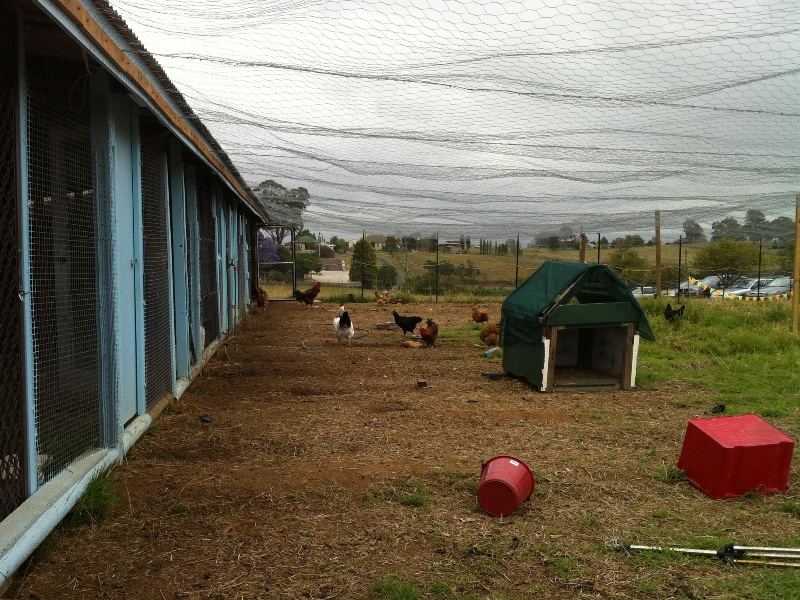
This is their organic chicken run - plenty of room for them to stretch their wings!

We were shown around by Julie Sneddon, who coordinates the farm and is a volunteer. Her enthusiasm and love for her work and the positive changes they have achieved is infectious. Listening to her stories about the successes they’ve had, it’s hard not to get inspired by it all.
For more information on Cana Communities visit their website.
The Cana Cafe is in the old farm shed, and offers hospitality experience for their tafe Outreach students. I can recommend the scones!

This furniture is made in the Cana workshop from recycled timber. It's another example of the work done through their Tafe Outreach programs.

This side of the farm features a nice dam overlooked by a new chill out space. The building of the deck and shade structure was again done by people participating in Cana programs to give them work skills. It will be used as a counseling and relaxation space.

This brightly coloured artwork is painted on recycled paper. It will actually be used as wrapping paper for their Christmas Puddings (on sale now), profits of which go towards a Christmas feast for the community in Redfern.

This is their organic chicken run - plenty of room for them to stretch their wings!
Monday 26 November 2012

Thursday 8 November 2012
Council staff back a donkey in the Melbourne Cup. And a chicken. And a fruit tree...

Tuesday was the Melbourne Cup. Widely referred to as the ‘race that stops a nation’, for most workplaces it sees some betting sweeps and an afternoon tea. However Margaret Streater from Council’s Children’s Services had a different idea for the Cup – Council staff should back a donkey!
Not just any donkey mind you, but a donkey from Oxfam. Oxfam have a number of gifts available to help people living in poverty and disadvantage. Donkeys are used in emergencies to carry essential medicine and food packages where vehicles can’t access.
So on Melbourne Cup day Margaret went around and collected money from staff for the donkey, and ended up collecting an impressive $390.30! On top of the donkey, this enabled her to directly support:
• Water for a school in Cambodia
• Breakfast for HIV positive children in South Africa
• A couple of goats for a family in Mozambique
• A chicken for a family in Laos
• Fruit trees for a community in South Africa
Thanks to Margaret for organising the collection and to all of the Council staff who donated their own money instead of having a flutter on the Cup.
For more information on how you can support initiatives like this, check out the Oxfam shop www.oxfamshop.org.au
Tuesday 11 September 2012
Local students plan a city for our future
Check out this amazing sustainable city created by 140 students from Erskine Park High School. The year 8 students involved had to consider what it takes to make a ‘city’ and then construct it themselves as part of their ‘Suburban Upcycle’ project. Cardboard boxes (including some from local businesses) were used to make a variety of buildings which made up the city, which was displayed at Penrith Regional Gallery & The Lewers Bequest over the weekend.
I’ve got to say I was pretty impressed with not only their artistry and design skills, but also their planning skills. There was a variety of housing types, essential services like hospitals, entertainment and dining options, and small businesses to serve the community. Not only that, the whole thing was built from sustainable materials and it can also be completely recycled at the end of its lifecycle – it’s basically a perfect model of a sustainable city! Congratulations to all of the students involved, and the teachers for coming up with such a cool project.


I’ve got to say I was pretty impressed with not only their artistry and design skills, but also their planning skills. There was a variety of housing types, essential services like hospitals, entertainment and dining options, and small businesses to serve the community. Not only that, the whole thing was built from sustainable materials and it can also be completely recycled at the end of its lifecycle – it’s basically a perfect model of a sustainable city! Congratulations to all of the students involved, and the teachers for coming up with such a cool project.


Subscribe to:
Posts (Atom)